Air Duct Sanitizing & Deodorizing in Florida
Air duct and vent sanitizing is the application of an EPA-registered disinfectant, usually as a fine fog, to ductwork, registers and the air handler cabinet after they have been mechanically cleaned. In Florida it costs $75 to $200 as an add-on to a cleaning. It treats what is left on clean surfaces, it does not replace the cleaning, and it does not fix active mold growth.
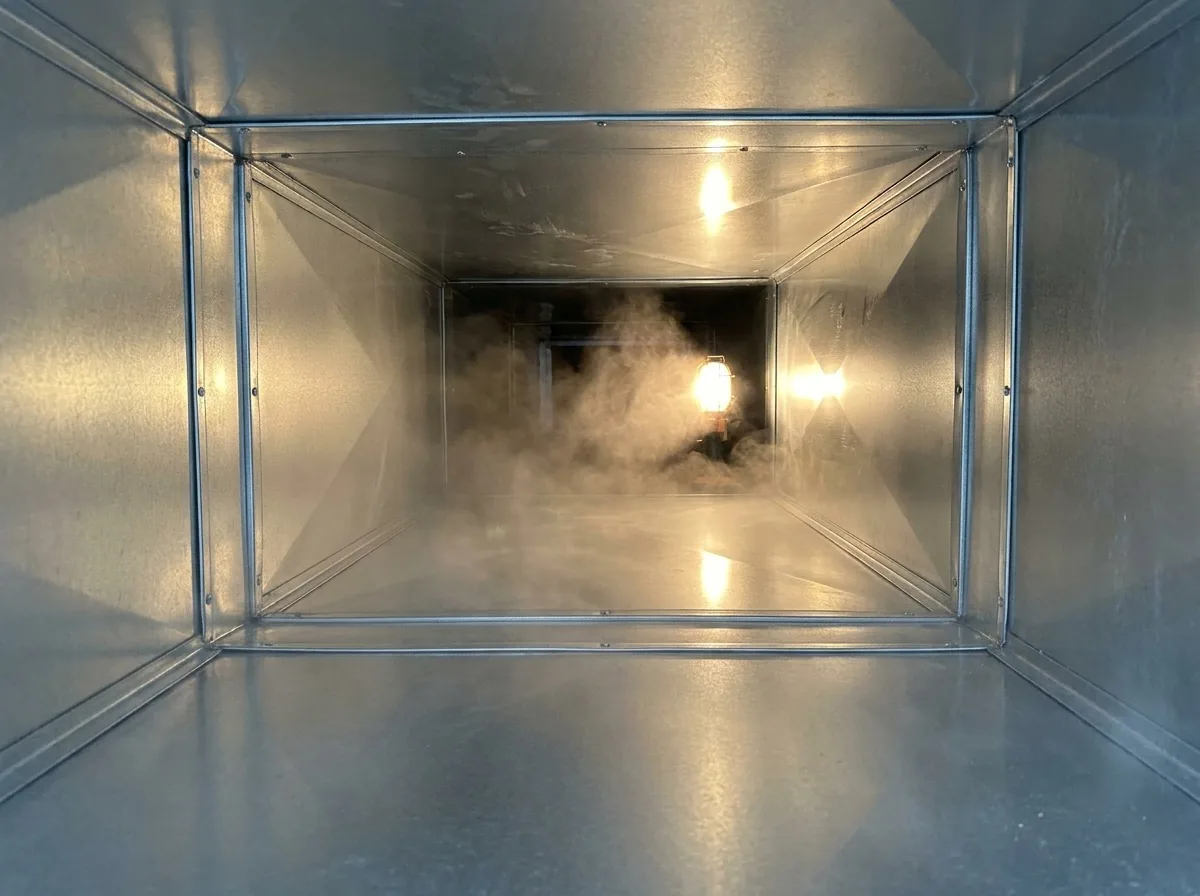
Air vent sanitizing and air duct sanitizing are the same job described from opposite ends. Most people see the vents, the grilles on the ceiling or wall where the cold air comes out, so that is the word they search for. The grille is only the last few inches of the system. Behind each one is a boot and a branch duct running back to a trunk line and the air handler, and sanitizing the grille without the duct behind it treats the one part you could already wipe with a cloth.
Cleaning and sanitizing do different things. Cleaning is removal: the system is held under negative air, every run is brushed or whipped, and the dust, debris and any loose growth leave the house in a collection drum. Sanitizing is treatment: once the surfaces are bare, a disinfectant goes on to deal with the bacteria, spores and odor sources still sitting on them. Florida humidity is what makes that thin layer matter, because a damp duct with a film of organic residue keeps smelling after the dust itself is gone.
The order is not optional. Disinfectant fogged into a dirty duct lands on top of the dust rather than on the duct wall, and whatever is living under that dust carries on untouched. That is why we only sanitize a system we have just cleaned, and why a cheap fogging offered in place of a cleaning is the version of this service to turn down.
The product is an EPA-registered disinfectant or antimicrobial labeled for use in HVAC systems. We do not sell a brand, and the brand matters less than the label, because the label is the legal instruction for that product: which surfaces it may go on, the dilution, how long it has to stay wet to work and how long before the space is used again. Ask to see it before anything is applied. Someone doing this properly carries the label and will hand it over without a fuss.
What the ducts are made of decides what can be treated. The EPA notes that the products used for this are registered for the smooth interior of bare sheet metal duct, and that none is registered as a biocide for fiberglass duct board or fiberglass-lined duct. A large share of Florida ductwork is flex or duct board, so we check the material during the walkthrough and tell you which parts of your system the product can go on before you agree to pay for it. A surface the label rules out is left alone.
On the day it is a short step at the end of the cleaning visit, not a second appointment. With the system off, the product is fogged into the ductwork through the access point used for the cleaning and through the registers, so the fine droplets travel along the runs and settle on the inside surfaces. The grilles are already off for washing, and they are treated before they go back up. Then the system stays off for the contact time printed on the label, and after that the blower is run to air the house out the way the label directs.
It earns its place in a handful of situations. After a small patch of visible growth on the coil, the plenum or a supply boot has been cleaned off. When a musty or sour smell survives a proper cleaning. In a house with several pets, where dander feeds the film on the duct walls faster. After rodents or roaches have been in the ductwork and their droppings have been removed. And where someone at home has a weakened immune system, which is where the extra margin is worth paying for. Outside those cases, on a system that was simply dusty, the cleaning is the whole job and we will tell you to skip the add-on.
It does not fix active mold. Growth you can see in the ducts or the air handler has to be physically removed, and fogging a disinfectant over it does not turn it into something else. If the camera shows active growth in the ducts or the air handler, we stop, photograph it, and quote it as air duct mold removal, a separate service with its own price. Mold in the drywall, insulation or framing around the system is separate licensed work in Florida, and we tell you so rather than treat it. Sanitizing also does nothing about the humidity that grew the film in the first place. A house that sits above 60 percent relative humidity loads the treated surfaces up again, and the money is better spent on the moisture first.
On safety for children and pets, the honest version is more useful than a plain yes. EPA registration means the product was reviewed for the use on its label, applied at the rate on its label. It is not a promise that nobody in the house will notice it. The precautions are simple: people and animals stay out of the rooms while it is being fogged and until the label says the space can be used again, bird cages are moved out or covered because birds react to anything in the air, and fish tanks are covered with the air pump switched off. If anyone at home has asthma or a chemical sensitivity, is pregnant, or there is an infant in the house, tell us at booking. You can decide against it, and the cleaning is done without it.
Sanitizing costs $75 to $200 and is quoted on its own line, separate from the cleaning, so you can say no to it. It is priced as an add-on to a cleaning rather than as a stand-alone visit. The air duct cleaning it follows runs $300 to $600 per system, and you have both numbers before we book. Where the musty smell is coming from the coil and the blower rather than the duct runs, the pairing that matters is cleaning those parts, which is our AC and HVAC system cleaning, with the cabinet treated afterward.
Key benefits
Treats what the brush leaves behind
Cleaning removes the debris. The disinfectant deals with the bacteria and spores still on the clean surfaces, which is where a lingering smell in a damp Florida system usually comes from.
Odor dealt with where it sits
Pet, smoke, sour and musty smells that survive a cleaning are treated on the duct and cabinet surfaces, instead of being covered with a scent that fades within a week.
The vents and the ducts behind them
Grilles come off and are washed and treated, and the boots and runs behind them are fogged as well, so the part you see and the part you never see are handled together.
A label you can read
An EPA-registered product, applied only to the surfaces its label allows and at the rate it sets. You can ask for the label before anything goes into the system.
Quoted so you can decline it
$75 to $200 on a separate line from the cleaning. If your system has no reason to need it, we say so and the line comes off the quote.
An honest stop at mold
Active growth is a mold removal job, not a sanitizing job. We photograph it and quote the removal, rather than fog over it and call it fixed.
Our process
- Clean first. Sanitizing follows a full source-removal cleaning of the ducts, plenums, blower and coil face on the same visit. A dirty system is never fogged.
- Check the duct material. We confirm what the ducts are made of, compare it with the product label, and tell you which surfaces will be treated and which will not.
- Prepare the house. People and pets out of the rooms being treated, birds and fish tanks protected, and the system switched off with the thermostat set so it cannot start.
- Fog the system. The disinfectant is fogged into the ductwork from the access point and the registers so it settles along the runs, and the washed grilles are treated before they are refitted.
- Contact time. The system stays off for the time printed on the label, because a disinfectant that dries before then does not do what the label says.
- Air out and restart. The blower runs to air the house as the label directs, access points are sealed, and we leave you the product name so you can look up its label yourself.
Air Duct Sanitizing & Deodorizing: FAQs
What is air vent sanitizing?
It is the disinfecting step done after your AC vents and the ducts behind them have been cleaned. The grilles are removed, washed and treated, and an EPA-registered disinfectant is fogged into the ducts so it settles on the inside surfaces. It deals with odor and the microbes left on clean surfaces, and in Florida it costs $75 to $200 as an add-on to a cleaning.
Is air duct sanitizing and cleaning the same thing?
No. Cleaning physically removes dust and debris from the system under negative air. Sanitizing is a disinfectant applied afterward to the surfaces the cleaning exposed. One is removal and the other is treatment, which is why they are priced separately: $300 to $600 per system for the cleaning and $75 to $200 for the sanitizing. When a company folds both into one low price, ask which of the two you are actually getting.
Do I need sanitizing after air duct cleaning?
Most homes do not. On a system that was simply dusty, the cleaning is the whole job. It is worth adding when visible growth was cleaned off the coil, the plenum or a boot, when a smell survives the cleaning, in a house with several pets, after rodents or roaches were in the ducts, or when someone at home has a weakened immune system. If none of those apply, we will tell you to skip it.
Can you sanitize air ducts without cleaning them?
We do not. Fog sent into a dirty duct settles on the dust layer instead of the duct wall, so it treats the debris and leaves the surface underneath as it was. An offer of sanitizing in place of a cleaning, usually at a lower price, is the one to decline.
Is duct sanitizing safe for my kids and pets?
Applied as its label directs, it is used in homes with children and pets, with a few precautions. Everyone, pets included, stays out of the treated rooms during fogging and until the label allows re-entry. Birds are moved or covered, and fish tanks are covered with the pump off. If someone has asthma or a chemical sensitivity, is pregnant, or there is an infant at home, tell us at booking and you can choose the cleaning without it.
Will duct sanitizing get rid of mold?
Only what it actually reaches on a clean, hard surface such as sheet metal. Growth living inside duct board, liner or insulation stays where it is, and active growth is not something a fog makes disappear. When we find active growth we photograph it and quote air duct mold removal, which takes the growth out and is followed by sanitizing, not replaced by it. Mold in walls, drywall or framing is separate licensed work in Florida.
Will sanitizing get rid of pet or smoke odors?
Often, when the smell is coming from residue on the duct and cabinet surfaces and the system has just been cleaned. Smoke that has soaked into walls, carpet and furniture will keep a house smelling whatever is done inside the ducts, and if the ducts are not the source we will say so before you pay for it.
What do you spray in the air ducts?
An EPA-registered disinfectant labeled for HVAC use, applied by fogging at the rate on its label. We do not push a brand. You get the product name before we start and can read the label, which lists the surfaces it is approved for, how long it has to stay wet and when the house can be used normally again.
How long does air duct sanitizing take?
It is a short step at the end of the cleaning visit, not a separate appointment. Most of the time is the contact period printed on the product label, while the system stays off, followed by running the blower to air the house. At booking we tell you how long the treated rooms need to stay empty for the product we plan to use.
Does sanitizing work on flex duct and duct board?
That depends on the label, and it is the first question to ask. The EPA notes that no product is registered as a biocide for fiberglass duct board or fiberglass-lined duct. We check what your system is made of during the walkthrough and treat only the surfaces the product is approved for.
How often should air ducts be sanitized?
There is no schedule for it. Sanitizing needs a reason each time, and the reason usually turns up at a cleaning, which most Florida homes need every 3 to 5 years. A company selling it every year as maintenance is selling a line item.