Air Duct Repair & Replacement in Florida
Air duct repair and replacement fixes leaks, disconnected joints, crushed runs, and failed insulation in your ductwork. Sealing leaky ducts is one of the highest-return home efficiency upgrades, because leaks in hot Florida attics waste cooled air before it ever reaches a room.
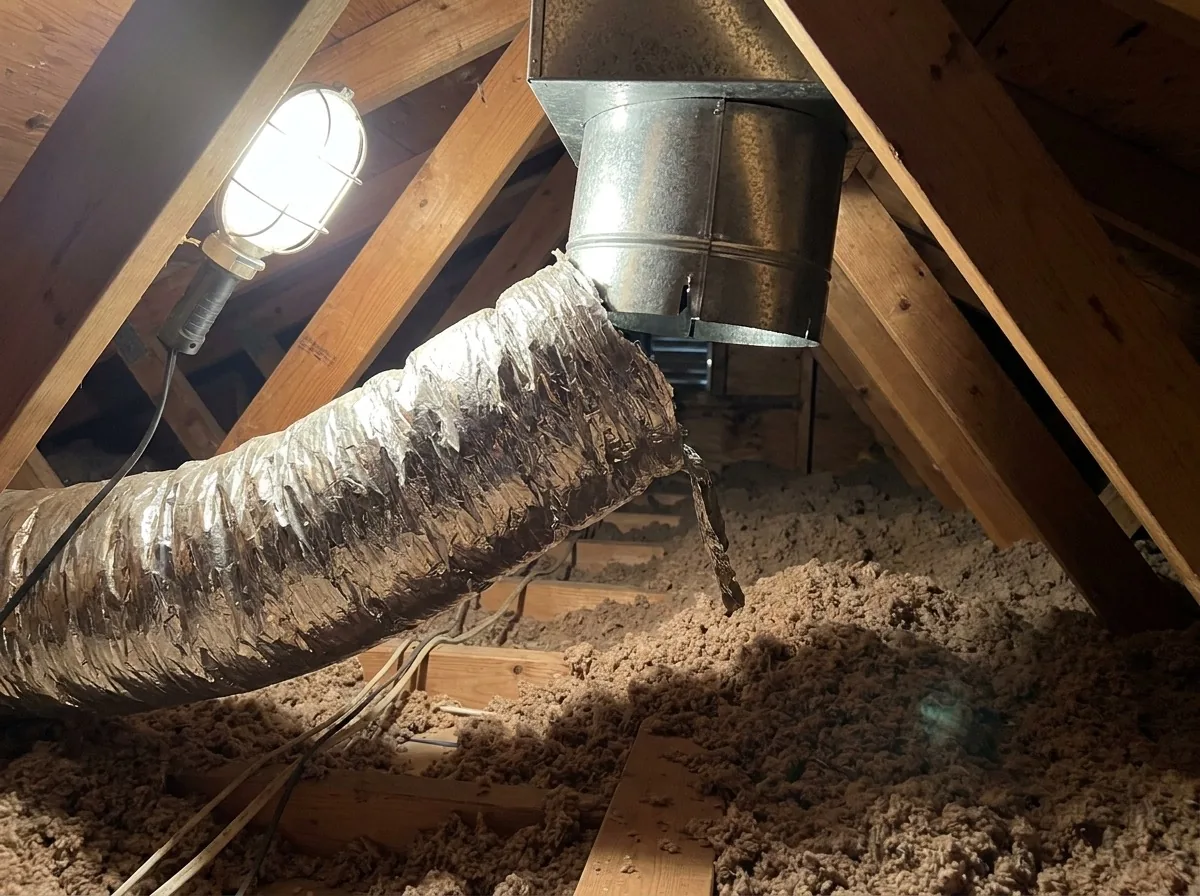
A typical Florida home with unsealed ductwork loses 20% to 30% of its conditioned air before it reaches a room. That air does not disappear: it is paid for at the meter and then delivered to an attic. In a Florida attic that means cooling a space which reaches 120°F to 140°F on a summer afternoon, which is why duct sealing frequently pays for itself faster than any equipment upgrade a contractor will try to sell you first.
Duct systems fail differently in Florida than they do anywhere else, and the reason is the attic. Flexible duct is rated for a long service life, but it realistically lasts 10 to 15 years in a Florida attic rather than the 20 to 25 the rating implies. Heat degrades the outer jacket, and it degrades the tape and mastic at the joints faster still. Well installed rigid metal duct lasts considerably longer, though its joints and its insulation wrap age on the same timescale as everything else up there.
There are four ways a duct run actually fails, and they need different repairs. A joint comes apart at the collar, usually because the original installer relied on tape rather than a strap and mastic, and the run now dumps its entire output into the attic. The jacket tears, often where the duct rubs a truss or where somebody stepped near it while running cable. A run gets crushed or kinked, by storage, by a later trade, or by its own sag once a support strap lets go. Or the insulation gives up, which is the quietest failure of the four and the one most often missed.
That last one matters more in Florida than most places. Duct carrying 55°F air through air at 90°F and 70% relative humidity sits below the dew point. Intact insulation keeps the surface above it. Once the insulation is compressed, wet or torn away, the duct sweats, the condensation soaks the jacket and the ceiling below it, and what began as an efficiency problem becomes a mold problem and eventually a drywall problem. Brown staining on a ceiling below an attic run is almost never a roof leak.
The symptoms a homeowner notices come in a predictable order. One room never cools while the rest of the house is fine. The bill climbs without the thermostat moving. The system runs longer and longer cycles and still leaves the house feeling sticky, because a leaking system moves air but loses the dehumidification that comes with a proper cycle. Dust returns within days of cleaning, because the return side is pulling attic air through a gap instead of pulling house air through a filter.
Finding the leaks is the part most quotes skip. A visual inspection finds a disconnected run and nothing else, because the joints that leak worst are the ones wrapped in insulation and hidden behind it. A duct pressure test seals the registers, pressurises the system with a calibrated fan and measures how much air the system cannot hold. That gives a number to work against before the repair and a second number after it, which is the only honest way to say whether a repair worked.
The repair itself is unglamorous and the details decide whether it lasts. Joints are sealed with mastic, not tape. Cloth backed duct tape is the single most common bad repair in a Florida attic: the adhesive is not rated for the heat, it releases within a season or two, and the joint is open again while the tape still looks like it is doing something. Mastic is a brushed on compound that stays flexible, and where a mechanical connection is needed it is a strap at the collar rather than adhesive holding the duct on.
Insulation is put back to a real R-value rather than wrapped loosely and hoped over. Supply runs in an unconditioned attic want R-6 to R-8 depending on where the run sits and which code cycle the house was built under. Insulation that is compressed by storage, or crushed where a run rests on a joist, is not doing its rated job no matter what is printed on the jacket.
The honest repair-or-replace rule is this. Localised leaks, a handful of disconnected collars and torn sections in an otherwise sound system are repaired, and the repair is good value. A system where the flex is brittle across the whole attic, where the insulation is saturated, or where the duct is simply undersized for the equipment it serves, is replaced, because sealing a system that cannot move enough air only makes the static pressure problem worse. Where duct insulation is saturated, that section is replaced rather than cleaned, because porous insulation cannot be cleaned back to a safe state.
What it costs is driven by scope rather than by square footage. A handful of reconnected collars and sealed joints sits at the bottom of the range. A full attic of replaced flex with new supports and new insulation sits at the top. We pressure-test first and give you the number before any work starts, because a duct quote given from a doorway is a guess.
Key benefits
Stop energy waste
Sealing leaks keeps cooled air in the ducts instead of the attic. On a system losing 20% to 30%, this is usually the highest-return efficiency work available on the house.
Even comfort
Repaired runs deliver full airflow to the rooms that never quite cooled, which is almost always a duct problem rather than an undersized air conditioner.
Better air quality
A sealed return stops pulling dusty, humid attic air past the filter instead of through it.
Lower humidity
A system that holds its air completes proper cycles, and a proper cycle is what actually dehumidifies a Florida house.
Stops the sweating
Restored insulation keeps the duct surface above the dew point, which is what ends the condensation, the ceiling stains and the mold that follows them.
A number, before and after
A pressure test before the work and a re-test after it means the result is measured rather than asserted.
Our process
- Pressure test. Registers are sealed and the system is pressurised with a calibrated fan, which measures total leakage and maps where it is.
- Inspect the whole run. Every accessible run is checked at the collar, along the jacket, at the supports and at the insulation, because the worst joints are the hidden ones.
- Reconnect and strap. Disconnected runs go back on the collar mechanically, with a strap, before anything is sealed.
- Seal with mastic. Joints are sealed with brushed mastic rather than tape, because tape adhesive is not rated for a Florida attic and releases within a season or two.
- Replace what cannot be repaired. Crushed, brittle or saturated sections are replaced with new insulated duct rather than patched.
- Re-support the runs. Sagging runs are re-hung so they are not resting on joists or holding a low spot where condensate can collect.
- Insulate and re-test. Insulation is restored to R-6 to R-8 for attic runs, then the system is tested again so the improvement is a measurement rather than a promise.
Air Duct Repair & Replacement: FAQs
How do I know if my air ducts are leaking?
The usual signs are one room that never cools while the rest of the house is fine, an energy bill that climbs without the thermostat moving, dust that returns within days of cleaning, and a house that stays sticky even when the thermostat is satisfied. All four are consistent with duct leakage, and a duct pressure test is what confirms it and locates it.
Is duct sealing worth it in Florida?
Usually yes, and more so here than almost anywhere else. A typical Florida home loses 20% to 30% of its conditioned air to duct leaks, and the air is being lost into an attic that reaches 120°F to 140°F. Sealing that frequently pays for itself faster than any equipment upgrade.
Should I repair or replace my ducts?
Localised leaks, disconnected collars and torn sections in an otherwise sound system are repaired, and the repair is good value. A system where the flex is brittle across the whole attic, where insulation is saturated, or where the duct is undersized for the equipment, is replaced. Sealing an undersized system only raises its static pressure.
How long does flex duct last in a Florida attic?
Realistically 10 to 15 years, at the low end of its rating. Attic temperatures of 120°F to 140°F degrade the outer jacket, and they degrade the tape and mastic at the joints faster still. Well installed rigid metal duct lasts considerably longer, though its joints and insulation wrap age on the same timescale.
Why are my air ducts sweating?
Because the duct surface has dropped below the dew point. A run carrying 55°F air through attic air at 90°F and high humidity will condense on its outside unless the insulation keeps the surface warm enough. Sweating ducts mean the insulation is compressed, wet or torn, and it is the failure most often missed.
There is a brown stain on my ceiling under the attic. Is that the roof?
Often it is not. A duct run that has lost its insulation sweats, the condensation soaks the jacket and then the drywall below it, and the stain looks like a slow roof leak. It is worth having the duct above that spot checked before anyone goes on the roof.
Can I just use duct tape on a loose joint?
It will look fixed and it will not stay fixed. Cloth-backed duct tape is the most common bad repair in a Florida attic: the adhesive is not rated for the heat, it releases within a season or two, and the joint is open again while the tape is still in place. Joints want a mechanical strap at the collar and brushed mastic over it.
What is a duct pressure test?
The registers are sealed, the duct system is pressurised with a calibrated fan, and the fan measures how much air the system cannot hold. It gives a leakage number before the repair and a second number after it, which is the only honest way to show a repair worked. A visual inspection finds a disconnected run and misses the wrapped joints that leak worst.
What R-value should duct insulation be in Florida?
Supply runs in an unconditioned attic generally want R-6 to R-8, depending on where the run sits and which code cycle the house was built under. Insulation that is compressed by storage, or crushed where a run rests on a joist, is not delivering its rated value whatever is printed on the jacket.
Will sealing my ducts make my air conditioner colder?
It will make more of the cold you are already paying for arrive in the room, which is usually what people mean. It does not change the equipment. If the house still does not cool after a sealed, properly sized duct system is delivering full airflow, the problem is the equipment or the load, not the ducts.
How long does duct repair take?
A handful of reconnected collars and sealed joints is a few hours. A full attic of replaced flex with new supports and new insulation runs one to two days depending on the size of the system and how accessible the attic is.
Do you give the price before starting?
Yes. We pressure-test first and the number comes before any work does. A duct quote given from a doorway, without a test and without going into the attic, is a guess.