UV Light Installation in Florida
HVAC UV light installation places a UV-C lamp inside your air handler to continuously kill mold, bacteria, and viruses on the evaporator coil and in the moving air. In humid Florida, UV-C is one of the most effective ways to keep the coil mold-free between cleanings.
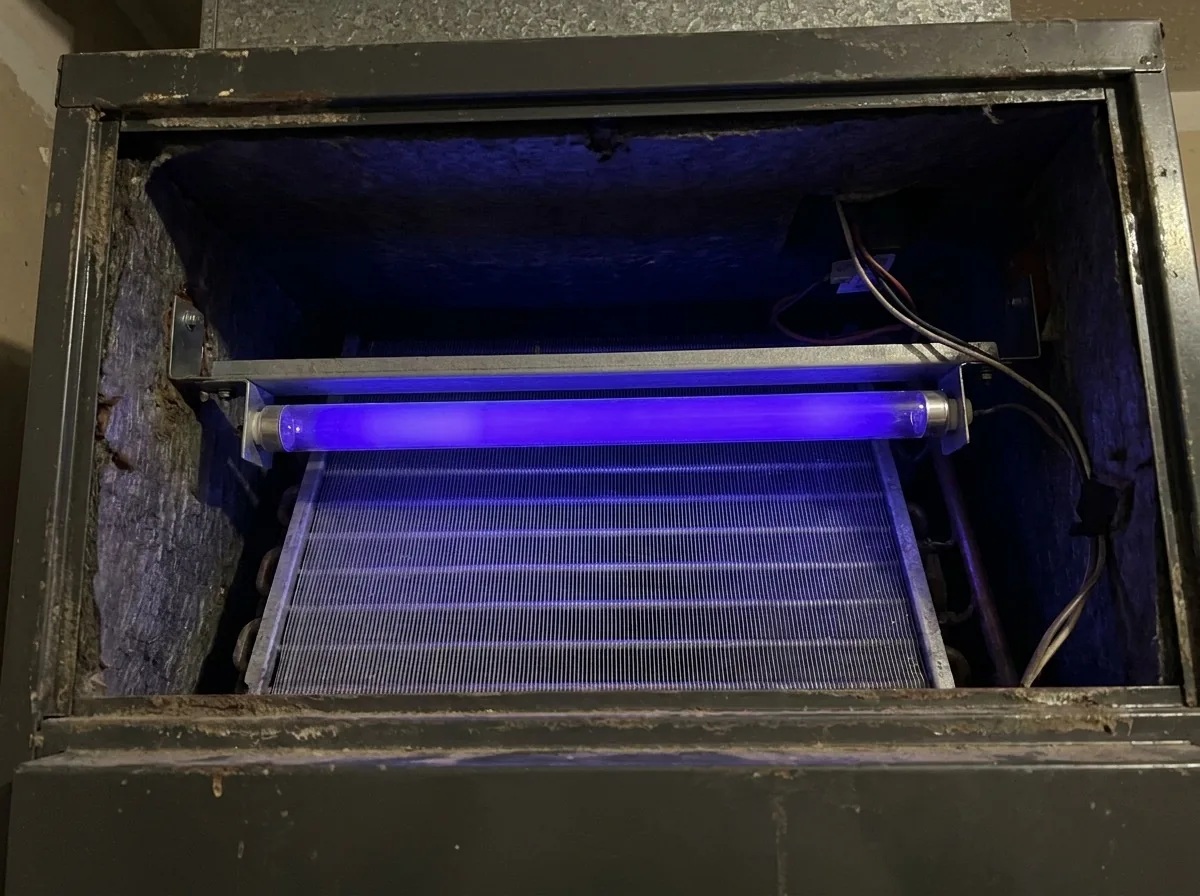
A UV light on an air conditioner is often worth it in Florida specifically, and considerably less so elsewhere. That is the honest version and it is worth starting with, because this is a product category where a lot is claimed. The reason it earns its place here is narrow and physical: the evaporator coil is cold, wet and dark for most of the Florida year, that is the first place growth establishes, and a UV-C lamp aimed at it holds that surface down continuously rather than once a year when somebody cleans it.
There are two quite different things sold as HVAC UV, and only one of them has a strong case. A coil lamp is mounted inside the air handler and pointed at the coil face and the drain pan. It works on a fixed surface, around the clock, for as long as the system runs, so the dose it delivers to that surface is enormous. An in-duct air sterilisation lamp is meant to treat the air passing by, and air passes a lamp in a fraction of a second, so the dose any single particle receives is tiny. The coil lamp is the one we fit and the one worth buying.
Florida changes the arithmetic because of run hours. A system that runs most of the year gives a coil lamp most of the year of operation, while the same lamp in a seasonal climate spends much of its life switched off next to a dry coil that was not growing anything anyway. The cost is $300 to $700 installed and the case rests on those hours.
It is equally important to be clear about what a UV lamp does not do, because this is where the category earns its bad reputation. It does not filter dust or pollen: it is not a substitute for a decent filter, and MERV 8 to MERV 11 is still what handles particulate in most Florida homes. It does not clean debris already sitting in your ducts: a lamp at the air handler has no effect fifteen feet down a supply run, and if the system needs cleaning it needs cleaning. And it does not fix a musty smell whose real source is standing water in a blocked drain pan, which is a drain problem wearing a mold problem costume.
Placement is most of the value. The lamp wants line of sight to the coil face and to the drain pan, because the pan is the other place growth establishes and the one people forget. A lamp mounted where it illuminates mostly sheet metal is a lamp doing very little, and that is a common outcome when the fitting is treated as a box to be mounted rather than an aim to be taken.
Two practical cautions. UV degrades some materials over time, so wiring insulation, flexible duct liner and plastic components within the lamp’s line of sight need to be checked and shielded where necessary rather than left to embrittle. And some lamps are sold on the basis that they produce ozone. Ozone is a lung irritant, it is not something to generate deliberately in an occupied home, and the lamps worth fitting do not do it. It is a fair question to ask of any unit quoted to you.
Maintenance is one item a year and it is the item people skip. A UV-C lamp continues to glow long after its germicidal output has fallen away, so a lamp that looks like it is working is not evidence that it is. Output falls off over roughly twelve months of continuous service, which is why the bulb is changed annually rather than when it goes dark. A lamp installed in 2024 and never touched since is a blue night light.
Where this fits alongside everything else: if the coil is already fouled, it is cleaned first, because a lamp holds a clean surface clean rather than removing what is already there. If humidity in the house is running above 60%, that is dealt with too, because 60% is the ceiling at which mold finds what it needs on cool surfaces, and no lamp out-argues a humidity problem. The lamp is what keeps the coil from going back to where it was.
Key benefits
Keeps the coil clean
Continuous UV-C on the coil face holds down the growth that fouls a coil and causes the musty smell, between cleanings rather than instead of them.
Works the hours Florida gives it
A system running most of the year gives a coil lamp most of the year of operation, which is why the case is stronger here than in a seasonal climate.
Treats the drain pan too
Aimed properly, the lamp covers the pan as well as the coil, and the pan is the other place growth establishes and the one usually forgotten.
Maintains efficiency
A coil that stays clean keeps transferring heat at the rate it was designed to, rather than drifting downward between services.
Low maintenance
One bulb a year. The lamp keeps glowing after its germicidal output has gone, so it is changed on a date rather than when it looks dead.
Honest about its limits
It is not a filter, it does not clean ducts, and it does not fix a blocked drain. We will say so before selling you one.
Our process
- Check whether it is the right answer. If the smell is a blocked drain pan, or the house is running above 60% humidity, we deal with that instead. A lamp does not out-argue either one.
- Clean the coil first. A lamp holds a clean surface clean. Where the coil is already fouled, it is cleaned before the lamp goes in, or the lamp is fighting something it cannot win.
- System sizing. Lamp output is matched to the air handler and the coil area it has to cover.
- Aim, not just mount. The lamp is placed for line of sight to the coil face and the drain pan, rather than wherever the bracket happens to fit.
- Shield what UV damages. Wiring insulation, flexible liner and plastics in the lamp’s line of sight are checked and shielded where needed rather than left to embrittle.
- Verify and date it. We confirm operation, confirm the interlock cuts the lamp when the panel opens, and label it with the date the bulb is due.
UV Light Installation: FAQs
Do UV lights really work in HVAC systems?
A coil-mounted lamp does the job it is sold for: it holds down growth on the evaporator coil surface, continuously, which is worth real money in a climate that keeps that surface wet. An in-duct lamp sold to sterilise the passing air is a much weaker proposition, because air passes a lamp in a fraction of a second and the dose is correspondingly small. We fit the first kind.
How often do UV bulbs need replacing?
About once a year, and this is the item people skip. The lamp goes on glowing long after its germicidal output has fallen away, so a lamp that looks like it is working is not evidence that it is. It is changed on a date rather than when it goes dark.
Is HVAC UV light safe?
In normal operation, yes: the lamp is enclosed inside the air handler and there is no exposure to anyone in the house. Do not look at an energised lamp with the panel open, and the unit should have an interlock that cuts it when the panel comes off. Ask whether a lamp you are quoted produces ozone, because some are sold on that basis and ozone is a lung irritant you should not be generating deliberately in an occupied house.
Will a UV light clean my air ducts?
No, and this is the most common misunderstanding about them. A lamp at the air handler has no effect fifteen feet down a supply run. It holds the coil clean; it does nothing about debris already sitting in the ductwork. If the system needs cleaning, it needs cleaning.
Can a UV light replace my air filter?
No. It does not filter dust or pollen at all, and those are what most people are actually reacting to. MERV 8 to MERV 11 is still what handles particulate in most Florida homes; the lamp is doing a different job entirely.
Will it get rid of the musty smell from my AC?
It will, if the smell is growth on the coil, which it usually is. It will not if the smell is standing water in a blocked drain pan, which is a drain problem rather than a mold problem, and which a lamp cannot reach. We check which one it is before recommending anything.
Is a UV light worth it in Florida?
Often yes here specifically, and less so elsewhere. The lamp controls the mold and bacteria that grow on a permanently damp surface, which is the condition Florida creates and drier climates do not, and a system that runs most of the year gives the lamp most of the year of operation. $300 to $700 installed.
Where should the lamp be mounted?
With line of sight to the coil face and to the drain pan. The pan is the other place growth establishes and the one most often left out. A lamp mounted where it mostly illuminates sheet metal is a lamp doing very little, which is what happens when fitting is treated as mounting a box rather than taking an aim.
Can UV damage anything inside the air handler?
It can, over time. UV embrittles some plastics and wiring insulation, so anything in the lamp’s line of sight is checked and shielded where needed. It is a known part of doing the job properly rather than a reason to avoid the product.
Should I clean the coil first or just fit the lamp?
Clean first. A lamp holds a clean surface clean; it does not strip a coil that is already fouled. Fitting a lamp to a dirty coil is paying for something and then asking it to do a job it was not designed for.